
Possible our readers are tired of stories about cryptocurrency scams. But we want to tell you about this case because the victim was a young man, a participant in the Karabakh war, a Molokan, who has serious health problems and spends most of his money on treatment. And he too, because of his kind-hearted nature, fell for this very professional scam.
How It Happened
Valera came across an enticing offer on social media and clicked a link where a broker was promising to help him make money. He filled out a contact form and brokers reached out to him via Telegram. They were very convincing — they explained how the company works, said they make money through trading and share the profits with investors. 📉 They assured him the team consisted only of professionals: experienced traders, financial analysts, and lawyers, which is why they deliver such high returns. Then they suggested he download an app and sent him a link. Valera downloaded it.
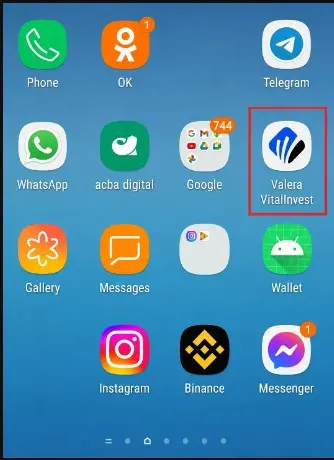
Next he needed to top up his wallet with $500. He was given an Armenian bank card number 💳 and asked to transfer the money to that card. After the transfer, the money appeared in his Vitalinvest app balance. Inside the app, the illusion of active trading was created using special software that simulated real market quotes.
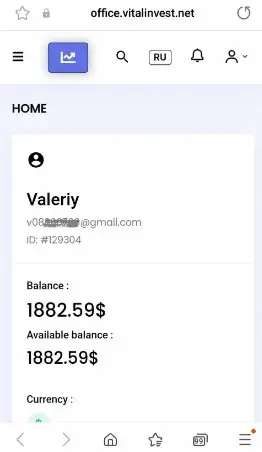
Next he needed to top up his wallet with $500. He was given an Armenian bank card number 💳 and asked to transfer the money to that card. After the transfer, the money appeared in his Vitalinvest app balance. Inside the app, the illusion of active trading was created using special software that simulated real market quotes.
A while later when he tried to withdraw again, a "financial specialist" from Vitalinvest got in touch and told him that due to sanctions, transfers from Russia couldn't go through — and the only way to withdraw was via cryptocurrency. They recommended he download Binance. After installing it, he received an email from what appeared to be a Binance address saying his exchange wallet had been topped up, and to withdraw he'd need to download Coinbase Wallet. Valera followed every instruction.
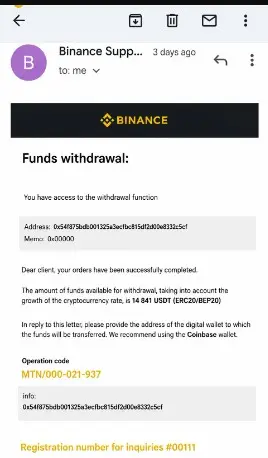
Eventually 14,841 USDT appeared in his Coinbase Wallet balance (on the Polygon network) — but those funds couldn't be withdrawn either. That's when Valera came to us.
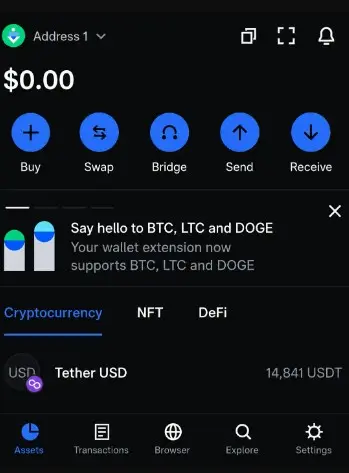
Our team at CryptoInvest immediately recognized the USDT in his wallet was fake 🚫 — we'd seen this before.
The scammers then tried to convince Valera to "top up his Polygon balance with another $1,500 to unlock the ability to withdraw the 14,841 USDT." They sent documents claiming Vitalinvest was a legally registered company with a license from the Central Bank of Russia.
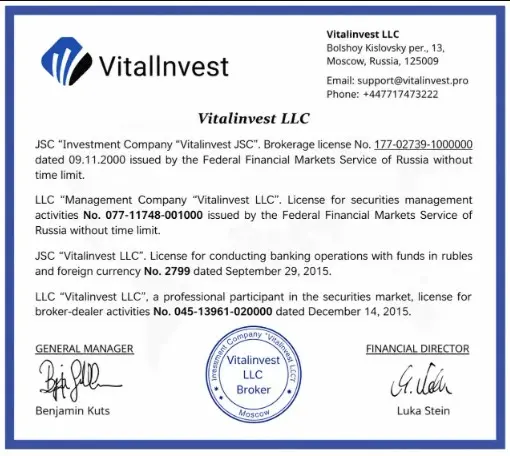
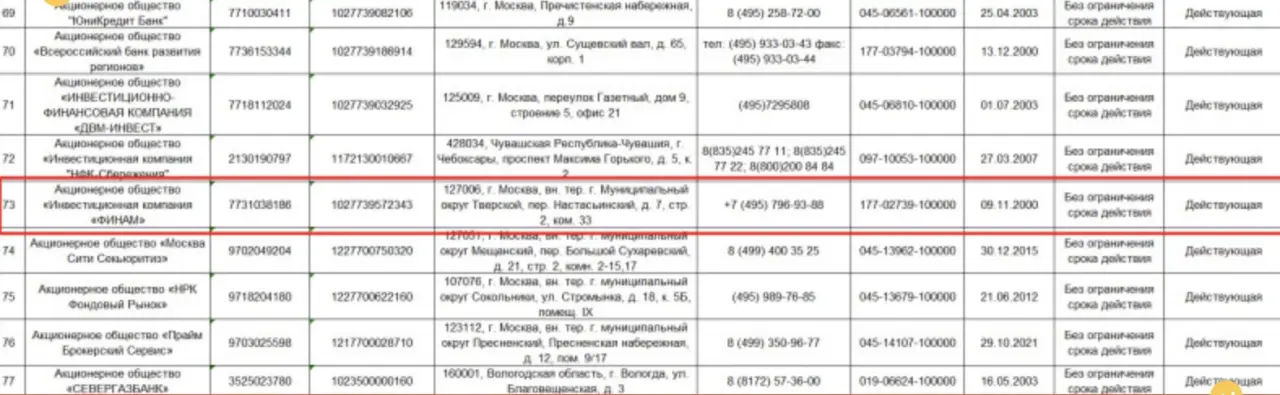
We checked the Central Bank's website ourselves. That license doesn't belong to Vitalinvest LLC — it belongs to a completely different company, JSC Investment Company FINAM.
On top of that, Vitalinvest LLC has actually been added by the Central Bank of Russia to its official list of companies with identified signs of illegal activity in the financial market.
Warning !
VitalInvest, JSC "Investment Company Vitalinvest", and LLC "Management Company Vitalinvest" are all scammers. The websites they operate through — vitalinvest.org, vitalinvest.co, private.vitalinvest.co, workspace.vitalinvest.co, workspace2.vitalinvest.co — are all fraudulent.
The email addresses they use to impersonate Binance [email protected] and [email protected] were created by the same scammers. Binance never communicates with clients via email. Emails that come from binance.com are automated notifications only. If you want to speak with a real Binance support agent, go through the internal messenger inside your account. You can verify any email claiming to be from Binance at binance.com/en/official-verification.
Watch out for any project promising high and stable returns. No company — especially one involved in trading, mining, or anything crypto-related — can deliver stable income. The crypto market is inherently unpredictable. Nobody can guarantee even 10% stable returns. And if someone is reaching out to you via Telegram or WhatsApp, always from different numbers, with no verifiable contact information — it's almost certainly a scam.